Log book
Entries before July 22, 2024 have been reconstructed by git log history.
2024 07 03
Initial commit
2024 07 06
Capture input, boot prompt achieved.
2024 07 09
Work on IO hooks
2024 07 10
IO hooks for all input and output adddresses so far.
2024 07 12
Added a flexible program loader to support rom images and code snippets.
2024 07 13
Added more ROM images from peel.dk
2024 07 18
Keyboard handling by kbhit() and injected keyboard interrupt, several line edit functions verifed (backspace, clear line, cursor.)
2024 07 19
Fixed major bug in Stack Pointer adjustment during keyboard interrupt.
2024 07 21
file descriptor investigations, annotations, ros module, match module, disk module
2024 07 22
In order to initialise the file system I fill out 55 records on each track with information compatible with figure 2 on page 17 (same document):
Each record looks like this
|0x9e|Trk|Sect|Csum|0xa|x00 x00 x00 x00 x00 x00|0x9b|Trk|Sect|Csum|0xa|1234|x00 x00 x00 x00 x00 x00|
So far I have seen no definition of what a sector is. So I am assuming the above record is two sectors, one starting with 0x9e (ID Record) and one starting with 0x9b ‘(Data Record)’.
This clearly need more work, but it is a start.
2024 07 24
The above data format was wrong. The end-of-record value is 0x10, not 0xa. Also the six consecutive 0x00 bytes are not actually returned by the controller.
Despite the picture on page 17, it seems that when reading a file desctiptor in a data record (0x9b), the checksum comes AFTER the FD and User data:
|0x9b| FD data (24 bytes) | User data | Csum | 0x10
Also, possibly due to other errors it looks like two sets of 0x9e blocks should come before the 0x9b:
[0x9e …] [0x9e …] [0x9b …]
Also, there does not seem to be a 0x10 after the ID records.
The filesystem can be initialised by adding ID and data blocks or even manyally writing to certain locations:
disk.idrecord(  2189, 17, 0)
disk.idrecord(  2193, 0, 0)
disk.datarecord(2197, 0, 25, 'MJC     ', data)
disk.idrecord(  2240, 0, 0)
disk.datarecord(2244, 0, 26, 'MJC     ', data)
disk.idrecord(  2287, 0, 0)
disk.idrecord(  2291, 0, 0)
disk.datarecord(2295, 0, 26, 'MJC     ', data)
for i in range(100):
    disk.data[0][2350+i] = 0x9e
After messing with the file system as above (should probably implement a loader soon), At least I get the OS to acknowledge that the disk I made was bad:
DISK OPEN
DISK KEY
DISK READ
disk 1, step 0, track 0
disk 1, step 0, track 1
...
disk 1, step 0, track 28
disk 1, step 0, track 29
disk 1, step 0, track 30
DISK (error) REPORT

FORMAT ERR
 ON
MJC
Only the string ‘FORMAT ERR …’ is output by the Q1 Emulator. The rest is debugging output based on IO calls and program counter values.
It would obviously help with more detailed knowledge about disk and file structures.
20.45
Disassembly from the emuklation (and bad disk format) reveals that this system is expecting 35 tracks per disk, not 77 as previously assumed.
2024 07 27
Still messing around with the filesystem and disk controller. Close but no cigar. Instead try and work on something else.
Managed to locate the entry point for the pseudo machine code interpreter. This is what PL/1 programs are compiled into.
Created a simple program to add two numbers on the stack. It consists of two opcodes ‘0xa’ for add and ‘0x1f’ for return (Q1 Advanced PL/1 programmer’s Manual p. 3 and 4):
# PL/1 Interpretive Program Counter
["snippet", [0x00, 0x80],        0x40fe], # set IPC = x8000

# Setup two numbers to be added, run PL/1 program
["snippet", [0x00],              0x6000], # nop (for trace)
["snippet", [0x21, 0x80, 0x40],  0x6001], # hl = 4080
["snippet", [0xf9],              0x6004], # SP = 4080
["snippet", [0x21, 0x10, 0x00],  0x6005], # hl = 0010
["snippet", [0xe5],              0x6008], # push hl
["snippet", [0x21, 0x20, 0x00],  0x6009], # hl = 0020
["snippet", [0xe5],              0x600c], # push hl
["snippet", [0xc3, 0x7c, 0x18],  0x600d], # run PL/1 program

# PL/1 program
["snippet", [0x0a],              0x8000], # add two numbers
["snippet", [0x1f],              0x8001]  # return
The funtionality was verified by trace from the emulation:
6001 21 80 40     ; ld hl, 0x4080             | sp=0000, a=00    bc=0000, de=0000, hl=0000, ix=0000, iy=0000
6004 f9           ; ld sp, hl                 | sp=0000, a=00    bc=0000, de=0000, hl=4080, ix=0000, iy=0000
6005 21 10 00     ; ld hl, 0x10               | sp=4080, a=00    bc=0000, de=0000, hl=4080, ix=0000, iy=0000
6008 e5           ; push hl                   | sp=4080, a=00    bc=0000, de=0000, hl=0010, ix=0000, iy=0000
6009 21 20 00     ; ld hl, 0x20               | sp=407e, a=00    bc=0000, de=0000, hl=0010, ix=0000, iy=0000
600c e5           ; push hl                   | sp=407e, a=00    bc=0000, de=0000, hl=0020, ix=0000, iy=0000
600d c3 7c 18     ; jp 0x187c                 | sp=407c, a=00    bc=0000, de=0000, hl=0020, ix=0000, iy=0000
187c 2a fe 40     ; ld hl, (0x40fe)           | sp=407c, a=00    bc=0000, de=0000, hl=0020, ix=0000, iy=0000
187f 7e           ; ld a, (hl)                | sp=407c, a=00    bc=0000, de=0000, hl=8000, ix=0000, iy=0000
1880 23           ; inc hl                    | sp=407c, a=0a    bc=0000, de=0000, hl=8000, ix=0000, iy=0000
1881 87           ; add a, a                  | sp=407c, a=0a    bc=0000, de=0000, hl=8001, ix=0000, iy=0000
1882 fa 95 18     ; jp m, 0x1895              | sp=407c, a=14    bc=0000, de=0000, hl=8001, ix=0000, iy=0000
1885 da 95 18     ; jp c, 0x1895              | sp=407c, a=14    bc=0000, de=0000, hl=8001, ix=0000, iy=0000
1888 22 fe 40     ; ld (0x40fe), hl           | sp=407c, a=14    bc=0000, de=0000, hl=8001, ix=0000, iy=0000
188b c6 0c        ; add a, 0xc                | sp=407c, a=14    bc=0000, de=0000, hl=8001, ix=0000, iy=0000
188d 6f           ; ld l, a                   | sp=407c, a=20' ' bc=0000, de=0000, hl=8001, ix=0000, iy=0000
188e 26 18        ; ld h, 0x18                | sp=407c, a=20' ' bc=0000, de=0000, hl=8020, ix=0000, iy=0000
1890 7e           ; ld a, (hl)                | sp=407c, a=20' ' bc=0000, de=0000, hl=1820, ix=0000, iy=0000
1891 23           ; inc hl                    | sp=407c, a=a5    bc=0000, de=0000, hl=1820, ix=0000, iy=0000
1892 66           ; ld h, (hl)                | sp=407c, a=a5    bc=0000, de=0000, hl=1821, ix=0000, iy=0000
1893 6f           ; ld l, a                   | sp=407c, a=a5    bc=0000, de=0000, hl=1821, ix=0000, iy=0000
1894 e9           ; jp (hl)                   | sp=407c, a=a5    bc=0000, de=0000, hl=18a5, ix=0000, iy=0000
18a5 e1           ; pop hl                    | sp=407c, a=a5    bc=0000, de=0000, hl=18a5, ix=0000, iy=0000
18a6 d1           ; pop de                    | sp=407e, a=a5    bc=0000, de=0000, hl=0020, ix=0000, iy=0000
18a7 19           ; add hl, de                | sp=4080, a=a5    bc=0000, de=0010, hl=0020, ix=0000, iy=0000
18a8 e5           ; push hl                   | sp=4080, a=a5    bc=0000, de=0010, hl=0030, ix=0000, iy=0000
18a9 c3 7c 18     ; jp 0x187c                 | sp=407e, a=a5    bc=0000, de=0010, hl=0030, ix=0000, iy=0000
187c 2a fe 40     ; ld hl, (0x40fe)           | sp=407e, a=a5    bc=0000, de=0010, hl=0030, ix=0000, iy=0000
187f 7e           ; ld a, (hl)                | sp=407e, a=a5    bc=0000, de=0010, hl=8001, ix=0000, iy=0000
1880 23           ; inc hl                    | sp=407e, a=1f    bc=0000, de=0010, hl=8001, ix=0000, iy=0000
1881 87           ; add a, a                  | sp=407e, a=1f    bc=0000, de=0010, hl=8002, ix=0000, iy=0000
1882 fa 95 18     ; jp m, 0x1895              | sp=407e, a=3e'>' bc=0000, de=0010, hl=8002, ix=0000, iy=0000
1885 da 95 18     ; jp c, 0x1895              | sp=407e, a=3e'>' bc=0000, de=0010, hl=8002, ix=0000, iy=0000
1888 22 fe 40     ; ld (0x40fe), hl           | sp=407e, a=3e'>' bc=0000, de=0010, hl=8002, ix=0000, iy=0000
188b c6 0c        ; add a, 0xc                | sp=407e, a=3e'>' bc=0000, de=0010, hl=8002, ix=0000, iy=0000
188d 6f           ; ld l, a                   | sp=407e, a=4a'J' bc=0000, de=0010, hl=8002, ix=0000, iy=0000
188e 26 18        ; ld h, 0x18                | sp=407e, a=4a'J' bc=0000, de=0010, hl=804a, ix=0000, iy=0000
1890 7e           ; ld a, (hl)                | sp=407e, a=4a'J' bc=0000, de=0010, hl=184a, ix=0000, iy=0000
1891 23           ; inc hl                    | sp=407e, a=38'8' bc=0000, de=0010, hl=184a, ix=0000, iy=0000
1892 66           ; ld h, (hl)                | sp=407e, a=38'8' bc=0000, de=0010, hl=184b, ix=0000, iy=0000
1893 6f           ; ld l, a                   | sp=407e, a=38'8' bc=0000, de=0010, hl=194b, ix=0000, iy=0000
1894 e9           ; jp (hl)                   | sp=407e, a=38'8' bc=0000, de=0010, hl=1938, ix=0000, iy=0000
1938 c9           ; ret                       | sp=407e, a=38'8' bc=0000, de=0010, hl=1938, ix=0000, iy=0000
First we put two numbers 0x0010 and 0x0020 on the stack, then call the pseudocode interpreter (pc 0x6001 - 0x600f). The ‘add’ pseudocode instruction is picked up at 0x187f, causing the add istructions at 0x18a5 - 0x 18a7, placing the correct result (0x0030) on the stack at 0x18a8.
Then at 0x1875 the ‘return from subroutine’ pseudocode instruction is retrieved, causing the return instruction at 0x1938.
2024 07 28
Testing more pseudocode instructions: multiply, divide and binary to string.
psmcb2ch = {
    "descr": "Q1 pseudo machine code program (bin to char)",
    "start": 0x6000,
    "stop" : 0x1938,
    "data": [
            ["file", "roms/JDC/full.bin", 0x0000],
            # PL/1 Interpretive Program Counter
            ["snippet", [0x00, 0x80],        0x40fe], # set IPC = x8000
            # Setup two numbers to be added, run PL/1 program
            ["snippet", [0x00],              0x6000], # nop (for trace)
            ["snippet", [0x21, 0x80, 0x40],  0x6001], # hl = 0x4080
            ["snippet", [0xf9],              0x6004], # SP = 0x4080
            ["snippet", [0x21, 0xab, 0xcd],  0x6005], # hl = 0xabcd, unused
            ["snippet", [0xe5],              0x6008], # push hl
            ["snippet", [0x21, 0xff, 0x7f],  0x6009], # hl = 0x7fff
            ["snippet", [0xe5],              0x600c], # push hl
            ["snippet", [0xc3, 0x7c, 0x18],  0x600d], # run program
            # 'PL/1' program
            ["snippet", [0x19],              0x8000], # divide
            ["snippet", [0x1f],              0x8001]  # return
    ],
    "funcs" : [],
    "pois" : []
}
Here 0x7fff is converted into ascii 32767 as verified from the hexdump:
########### HEXDUMP 0x2000 - 0x10000 ####################################
....
4070 03 00 44 00 9b 06 04 00 2e 42 05 00 2e 42 ab cd  ..D......B...B..
....
40f0 fd fd fd fd fd fd fd fd fd fd fd fd fd fd 02 80  ................
....
4220 fd fd fd fd fd fd fd fd fd fd fd fd fd fd 33 32  ..............32
4230 37 36 37 fd fd fd fd fd fd fd fd fd fd fd fd fd  767.............
....
6000 00 21 80 40 f9 21 ab cd e5 21 ff 7f e5 c3 7c 18  .!.@.!...!......
....
8000 19 1f fd fd fd fd fd fd fd fd fd fd fd fd fd fd  ................
....
########### HEXDUMP END #################################################
2024 07 30
Mostly address and address range annotations. Some pylint related changes.
2024 08 02
Found real Q1 disk images (from flux samples) here: https://github.com/MattisLind/q1decode/blob/main/Q1DISKS/README.md
This clarified the sector numbering. converted testdiskette C_S0T00.000 into a python structure which is loaded when creating the filesystem. There are 23 file on the disk, including the special INDEX file.
> python3 emulator.py
INDEX:  INDEX
INDEX:  SCR
INDEX:  DALIGN
INDEX:  PRINT
INDEX:  RTCTEST
INDEX:  CONV
INDEX:  PTEST
INDEX:  DANKB
INDEX:  DISPTEST
INDEX:  SWEDKB
INDEX:  GERMKB
INDEX:  SELKB
INDEX:  DINDEX
INDEX:  COPY
INDEX:  ALTER
INDEX:  MTEST
INDEX:  DISK
INDEX:  CTEST
INDEX:  BDTEST
INDEX:  SEL
INDEX:  VERIFY
INDEX:  SUM
INDEX:  FRENKB
There are still some issues with accessing the files. For example if I type in ‘SCR’ the emulator enters an infinite loop searching for iD records on Track 0.
On track 0 all data records have size 40 bytes.
(0x9e, track, sector, cksum, 0x10, 0x9b, 40 bytes, cksum, 0x10)
On the other tracks records are 255 bytes:
(0x9e, track, sector, cksum, 0x10, 0x9b, 255 bytes, cksum, 0x10)
2024 08 04
Still a bit confused about the size of the disk. I’ve seen code for skipping 2189 bytes (reading them but not examining them) before looking for markers. So far I had assumed that something else was on the disk. Now I am not so sure. Perhaps this allows the disk to spin up before addressing the data?
Added several disk images and a utility to load data recovered from the fluxsamples provided by Mattis Lind.
For example.
src/disks/fluxsamples> python3 image.py
...
nonz 0x52: load  78 bytes into address 0x4547
41 2e 20 20 20 20 20 20 20 20 20 20 20 20 20 20  A.
20 20 20 20 20 20 20 20 20 20 20 20 20 20 20 20
20 20 20 20 20 20 20 cb 10 9e 01 02 03 10 9b 20         ........
20 20 20 20 20 20 20 44 41 54 45 2d 57 52 49 54         DATE-WRIT
54 45 4e 2e 20 20 20 20 20 20 20 20 20 20        TEN.

nonz 0x20: load  57 bytes into address 0x3120
38 34 2d 30 32 2d 30 36 2e 20 20 20 20 20 20 20  84-02-06.
20 20 20 20 20 20 20 20 20 20 20 20 20 20 20 20
20 20 20 20 20 20 20 20 20 20 20 20 ac 10 9e 01              ....
03 04 10 9b 20 20 20 20 20                       ....

nonz 0x20: load  65 bytes into address 0x2020
55 54 48 4f 52 2e 20 20 20 20 20 20 20 20 20 20  UTHOR.
20 20 20 20 20 20 20 20 4f 4c 4c 45 2e 20 20 20          OLLE.
20 20 20 20 20 20 20 20 20 20 20 20 20 20 20 20
20 20 20 20 20 20 20 20 20 20 20 20 20 20 20 20
...
2024 08 17
Oops, forgot to update the log for a while. But yesterday I succeeded in loading and running the ‘SCR’ program from (emulated) disk.
This marks a major milestone in this project. The sequence of commands that verifies this are
> python3 emulator.py
> SCR <enter>
> opt-b
########### HEXDUMP 0x2000 - 0x10000 ####################################
....
4060 fd fd fd fd fd fd fd fd fd fd 47 04 56 05 78 07  ..........G.V.x.
4070 19 13 00 00 04 14 4b 14 d0 40 44 0d 01 02 82 02  ......K..@D.....
4080 c3 00 43 c3 fd 07 c3 15 08 00 00 00 00 00 02 00  ..C.............
4090 00 0d 00 00 20 00 00 00 00 00 42 01 00 20 02 00  .... .....B.. ..
40a0 01 01 01 40 00 00 00 00 82 00 28 00 82 01 00 00  ...@......(.....
40b0 00 00 00 00 01 00 ff 00 00 00 00 00 00 00 00 00  ................
40c0 00 00 00 00 00 00 00 00 00 00 00 00 00 00 00 00  ................
40d0 01 00 53 43 52 20 20 20 20 20 01 00 ff 00 1e 01  ..SCR     ......
40e0 01 00 01 00 00 00 00 00 00 00 00 00 00 00 00 00  ................
40f0 00 00 00 00 00 00 00 00 00 00 00 00 00 00 00 00  ................
4100 00 20 20 20 20 20 20 20 20 20 20 20 20 20 20 20  .
4110 20 20 20 20 20 20 20 20 20 20 20 20 20 20 20 20
4120 20 20 20 20 20 20 20 20 20 20 20 20 20 20 20 20
4130 20 20 20 20 20 20 20 20 20 20 20 20 20 20 20 20
4140 20 20 20 20 20 20 20 20 20 20 20 20 20 20 20 20
4150 20 20 20 20 20 20 20 20 20 20 20 20 20 20 20 20
4160 20 20 20 20 20 20 20 20 20 20 20 20 20 20 20 20
4170 20 20 20 20 20 20 20 20 20 20 20 20 20 20 20 20
....
4200 0d 00 43 6f f3 3e 00 d3 0a 3e 05 d3 04 16 00 7a  ..Co.>...>......
4210 d3 03 14 7a fe 80 ca 36 43 2e ff 2d c2 17 43 db  .......6C..-..C.
4220 01 fe 00 ca 0b 43 fe 0e ca 0b 43 fe 0f c2 0b 43  .....C....C....C
4230 db 01 fe 0e c2 2c 43 c3 0b 43 21 42 43 0e 03 06  .....,C..C!BC...
4240 2d ed b3 c3 09 43 20 20 20 20 20 20 20 20 20 20  -....C
4250 20 20 20 54 48 49 53 20 53 50 41 43 45 20 46 4f     THIS SPACE FO
4260 52 20 52 45 4e 54 20 20 20 20 20 20 20 20 20 20  R RENT
4270 20 20 20 0d 81 40 02 00 43 00 20 20 20 20 20 11     ..@..C.     .
4280 00 21 00 43 0e 01 cd 1e 00 3a 00 43 fe 2c c2 d3  .!.C.....:.C.,..
4290 43 32 80 43 32 81 43 21 00 43 0e 01 cd 1e 00 cd  C2.C2.C!.C......
42a0 1b 00 21 d0 40 cd 0c 08 c4 18 08 21 00 00 22 da  ..!.@......!..".
42b0 40 c3 e7 43 0d 59 4f 55 52 20 46 49 4c 45 20 49  @..C.YOUR FILE I
42c0 53 20 45 4d 50 54 59 21 b5 43 0e 13 cd 27 00 c3  S EMPTY!.C...'..
42d0 d0 43 cd 1b 00 21 d0 40 cd 0c 08 c4 18 08 2a da  .C...!.@......*.
42e0 40 7c b5 ca c8 43 cd 24 00 21 d0 40 0e 16 11 c0  @....C.$.!.@....
42f0 42 cd 00 78 75 45 3c 39 36 2f 2a 25 1e 18 02 00  B..xuE<96/*%....
4300 f3 3e 00 d3 0a 3e 05 d3 04 16 00 7a d3 03 14 7a  .>...>..........
4310 fe 80 ca 36 43 2e ff 2d c2 17 43 db 01 fe 00 ca  ...6C..-..C.....
4320 0b 43 fe 0e ca 0b 43 fe 0f c2 0b 43 db 01 fe 0e  .C....C....C....
4330 c2 2c 43 c3 0b 43 21 42 43 0e 03 06 2d ed b3 c3  .,C..C!BC...-...
4340 09 43 20 20 20 20 20 20 20 20 20 20 20 20 20 54  .C             T
4350 48 49 53 20 53 50 41 43 45 20 46 4f 52 20 52 45  HIS SPACE FOR RE
4360 4e 54 20 20 20 20 20 20 20 20 20 20 20 20 20 fd  NT             .
....
########### HEXDUMP END #################################################
> <enter>
VWXYZ[\]^_`abcdefghijklmnopqrstuvwxyz{|}             THIS SPACE FOR RENT              !"#$%&'()*+,-./0123456789:;<=>?@ABCDEFGHIJKLMNOP
QRSTUVWXYZ[\]^_`abcdefghijklmnopqrstuvwxyz{|}             THIS SPACE FOR RENT              !"#$%&'()*+,-./0123456789:;<=>?@ABCDEFGHIJK
LMNOPQRSTUVWXYZ[\]^_`abcdefghijklmnopqrstuvwxyz{|}             THIS SPACE FOR RENT              !"#$%&'()*+,-./0123456789:;<=>?@ABCDEF
GHIJKLMNOPQRSTUVWXYZ[\]^_`abcdefghijklmnopqrstuvwxyz{|}             THIS SPACE FOR RENT              !"#$%&'()*+,-./0123456789:;<=>?@A
BCDEFGHIJKLMNOPQRSTUVWXYZ[\]^_`abcdefghijklmnopqrstuvwxyz{|}             THIS SPACE FOR RENT              !"#$%&'()*+,-./0123456789:;<
=>?@ABCDEFGHIJKLMNOPQRSTUVWXYZ[\]^_`abcdefghijklmnopqrstuvwxyz{|}             THIS SPACE FOR RENT              !"#$%&'()*+,-./01234567
89:;<=>?@ABCDEFGHIJKLMNOPQRSTUVWXYZ[\]^_`abcdefghijklmnopqrstuvwxyz{|}             THIS SPACE FOR RENT              !"#$%&'()*+,-./012
3456789:;<=>?@ABCDEFGHIJKLMNOPQRSTUVWXYZ[\]^_`abcdefghijklmnopqrstuvwxyz{|}             THIS SPACE FOR RENT              !"#$%&'()*+,-
./0123456789:;<=>?@ABCDEFGHIJKLMNOPQRSTUVWXYZ[\]^_`abcdefghijklmnopqrstuvwxyz{|}             THIS SPACE FOR RENT              !"#$%&'(
)*+,-./0123456789:;<=>?@ABCDEFGHIJKLMNOPQRSTUVWXYZ[\]^_`abcdefghijklmnopqrstuvwxyz{|}             THIS SPACE FOR RENT              !"#
$%&'()*+,-./0123456789:;<=>?@ABCDEFGHIJKLMNOPQRSTUVWXYZ[\]^_`abcdefghijklmnopqrstuvwxyz{|}             THIS SPACE FOR RENT
  !"#$%&'()*+,-./0123456789:;<=>?@ABCDEFGHIJKLMNOPQRSTUVWXYZ[\]^_`abcdefghijklmnopqrstuvwxyz{|}             THIS SPACE FOR RENT
         !"#$%&'()*+,-./0123456789:;<=>?@ABCDEFGHIJKLMNOPQRSTUVWXYZ[\]^_`abcdefghijklmnopqrstuvwxyz{|}             THIS SPACE FOR RENT
2024 08 18
Better display emulation. Had to resort to using UDP to send the display buffer to a curses based application.
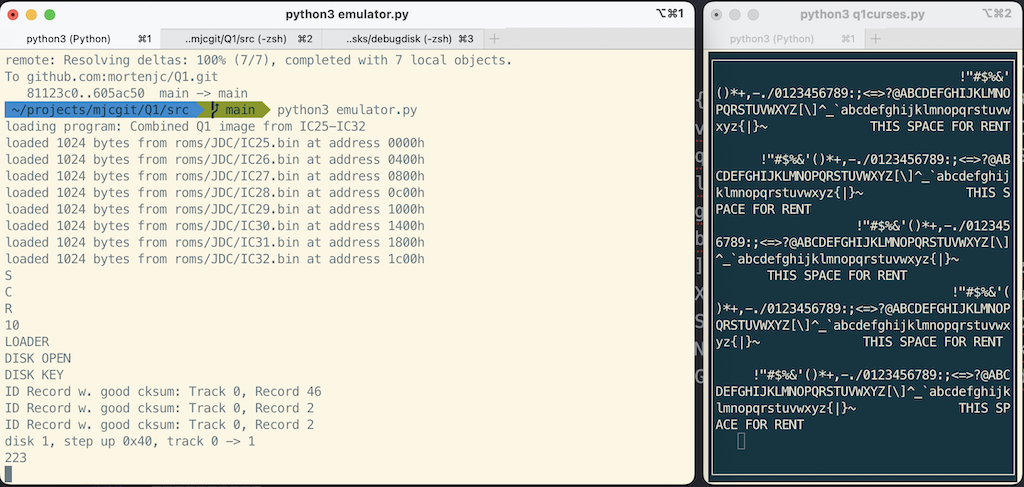
Left window: debug output and keyboard input. Right window display emulator.
2024 08 28
Some cleanup, added track 4 from the ‘felsökningsdiskett’ disk. Added the PRINT program from the same disk for disassembly and debug. It is the first use of the real time clock (RTC) that I have seen. Yet another item for the (nonexisting) TODO list.
2024 08 29
Added RTC in() and out() abstractions, corrected program name from PRINT to RTCTEST. Added a beep for keyboard out() (bits 0 and 1).
2024 08 30
Added a readbin.py function that converts the datamuseum .BIN file into python code that can be loaded by the emulator.
2024 08 31
Managed to create a filesytem with (parts of) the data from Q1_FLOPPY.BIN. The main objective was to run the DINDEX program which was corrupted on the debugdisk (felsökningsdiskett) from Mattis.
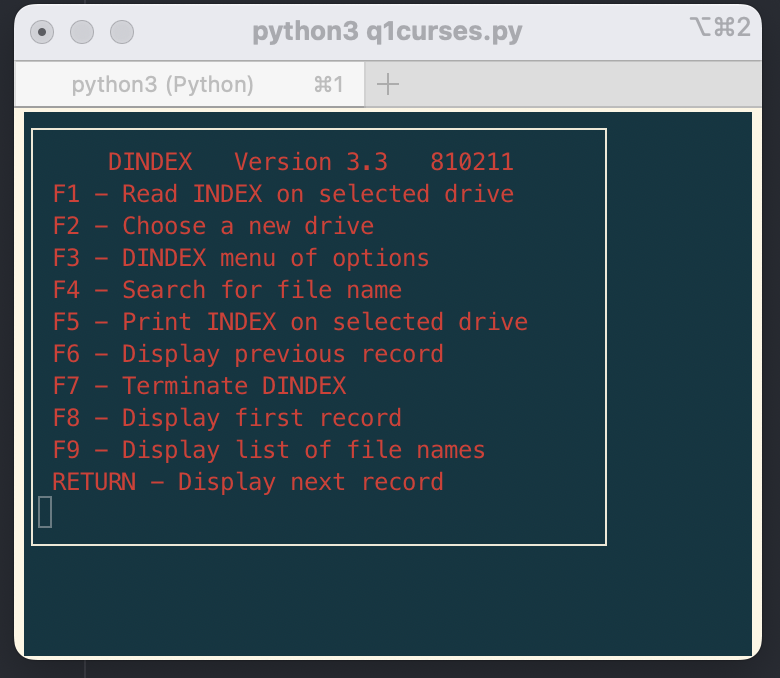
DINDEX program running.
2024 10 09
Finally got around to investigate the use of the Fn function keys. These are used as function selectors in the DINDEX program. The ROS user’s manual mentions some reserved ranges (under PROCH on page 10) but the text was a bit unclear to me and it certainly was not obvious where F1 started. But a bit of exprimentation finally revealed that F1 == 0x11. The rest was quickly verified after that. So far only F5 seems to cause me problems, probably due to missing emulator functionality, but the rest of the range F1 - F9 has been verified.
I also figured out a way to ‘debug’ the PL/1 programs. Basically I can add the PC address for each function to a disctionary and use that to print out some text to provide an indication of the program flow.
2024 10 10
8:00
Better documentation for keyboard input. Verified that F5 key as used in DINDEX causes system halt due to unregistered output hook to address 0xc. This could be a printer as the menu says “F5 - Print INDEX on selected drive”, but this is currently speculation.
Update 9:53
F5 definitely seems to trigger printing via out() to the undocumented device 0xc. By collecting the output in a buffer and printing it out when receiving a linefeed (0xa) the following neatly formatted output is produced:
                           Maximum  First  Last          Records/
Name     Records   Length  Records  Track  Track  Tracks  Track

INDEX       14       40       88      0      0      1      88
BACKUP      14      255       19      1      1      1      19
DISK        36      255       38      2      3      2      19
COPY        18      255       19      4      4      1      19
SORT         7      255       19      5      5      1      19
JDC         25      255       38      6      7      2      19
DINDEX      23      255       38      8      9      2      19
FARK        43      255       57     10     12      3      19
FUDTOG      64      255       76     13     16      4      19
FMOMS       74      255       76     17     20      4      19
FRAPP       59      255       76     21     24      4      19
FBAL        79      255       95     25     29      5      19
However, not all files are printed. For example a multi-track file named 1050 is not included. Not sure why.
2024 11 08
PL/1 disk investigations
Using q1decode from Mattis Lind, I try to reconstruct the contents of the disk based on individual track information. Track 0 has no information an thus we have no filenames to help us. Many files/tracks seem to have unrecoverable errors.
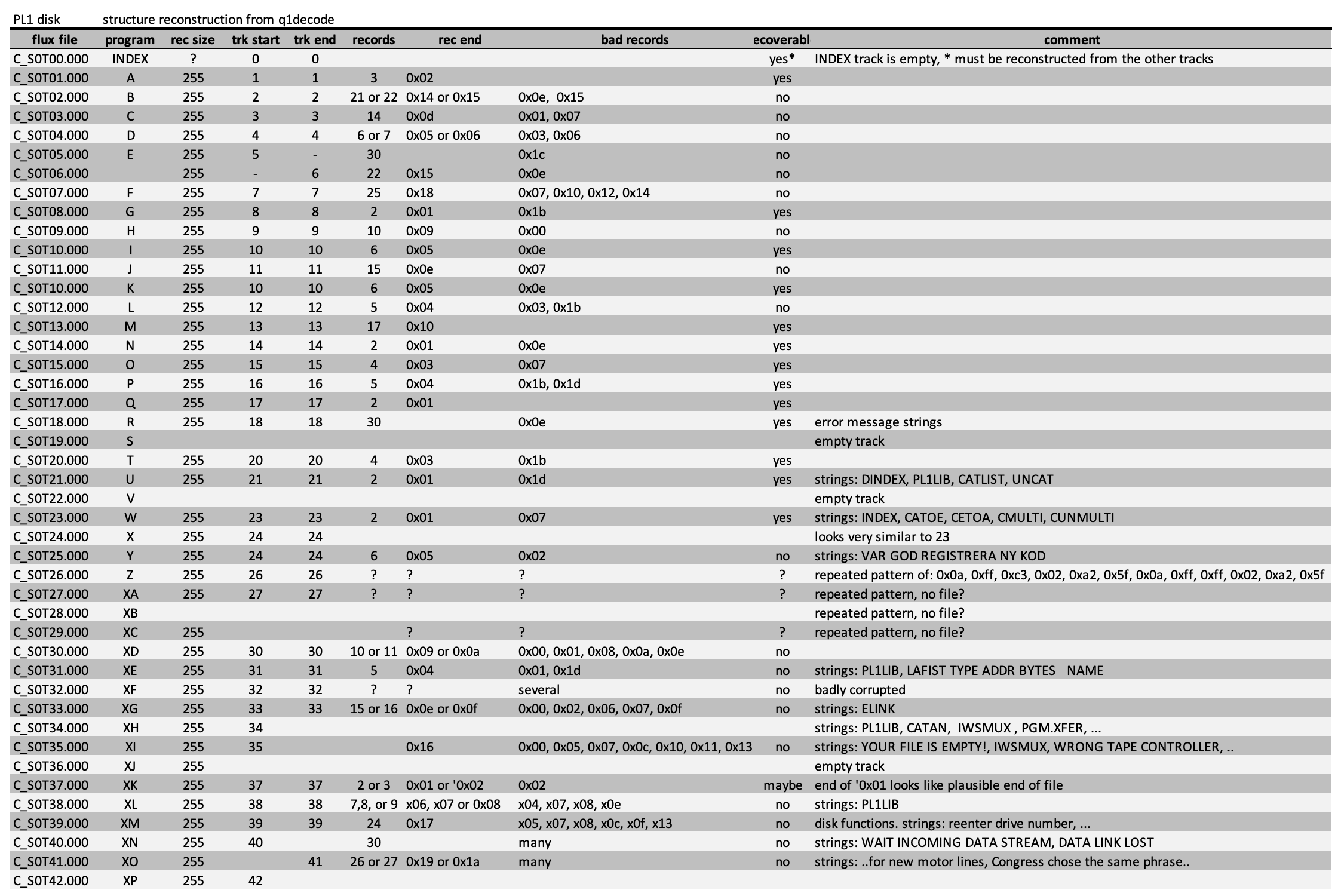
PL/1 disk track information (inferred)
2024 11 10
Contacted Achim Baqué (https://www.achimbaque.com/#about) who is the new owner of the Q1 previously held by Mattis Lind.
2024 11 11
Added new tracks (not working yet) from Felsökningsdiskett. Restructured the emulator by creating the Emulator class.
Contacted HomeComputerMuseum (https://www.homecomputermuseum.nl/) as they seem to have a Q1 or two on loan (possibly from Achim).
2024 11 12
Added more tracks (working, but many are corrupted) from Felsökningsdiskett. Improved Serial Impact Printer and Dot Matrix Printer IO.
Got a reply from HomeComputerMuseum. They have no disks. Asked if they would introduce me to Bernardo (TheByteAttic) as he is otherwise difficult to get in touch with.
2024 11 13
Added SerialImpactPrinter class to simplify z8io.py which was getting messy. Better print buffering.
2024 11 14
Added WRITE support and support for multiple disks (merged from other branch). Using the program ALTER, files can now be renamed. Looks like they can also be write protected. But write protect does apparently not prevent renaming.
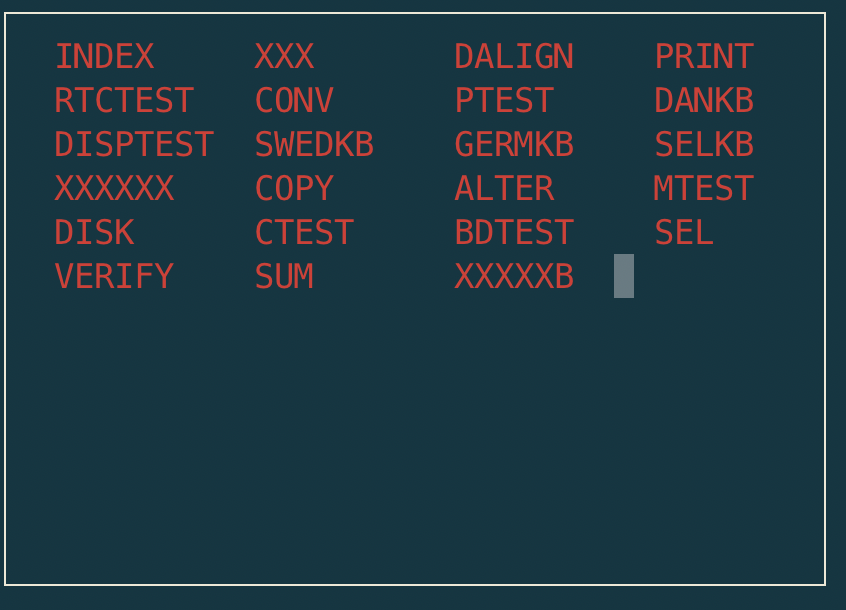
Files SCR, DINDEX and FRENKB renamed to XXX, XXXXXX, XXXXXB using ‘ALTER’ program
Changes to disks, such as renaming and write protection is not written to disk so it is safe to experiment.
The emulated system now comes preloaded with two floppy images: datamuseum and debugdisk. The first has good integrity the second has a lot of bad tracks so most programs will fail to load and execute. Some good files are: SCR, ALTER, DISPTEST, PTEST, COPY
2024 11 13
Added support for UDP based logging via the class utils/UdpTx. Added scripts to start logging in utils. Now the emulator console can be used for debugging and the other windows for device-specific inspection.
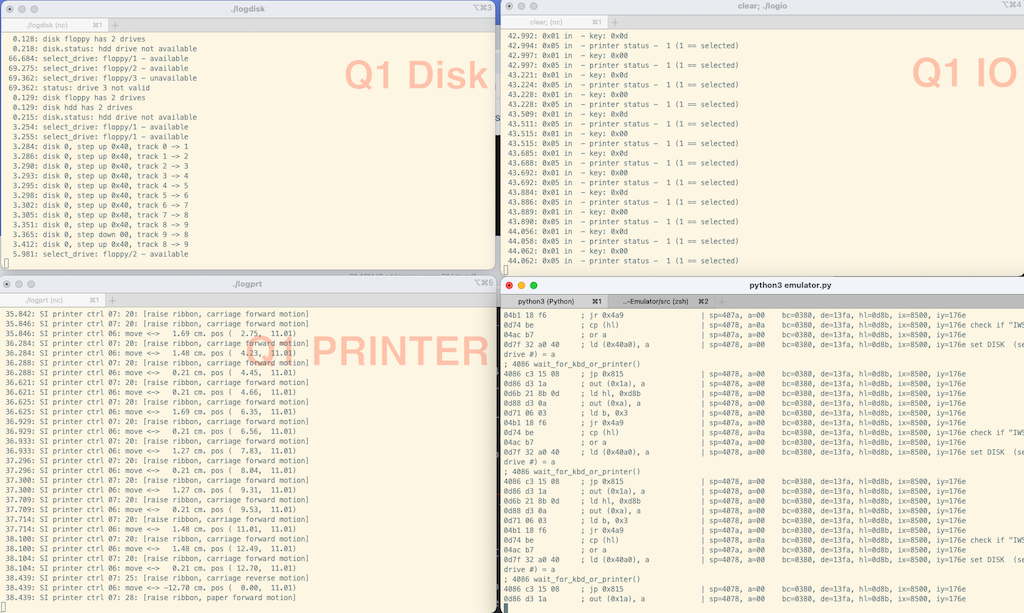
Separate logging for io, printer and disk
… and used it to fix the crashing bug. Now multiple floppy drives are supported (1 to 7) and we can test the COPY utility:
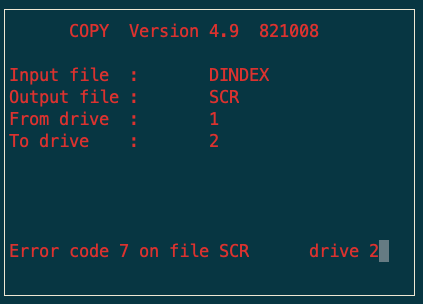
Using ALTER to write protect SCR, then failing attempt to COPY DINDEX from drive 1 to SCR on drive 2 due to protection.
2024 11 16
Added a third floppy image to the emulator. Now we are using all three available disks. The new one has PL/1 source code in it.
Documentation got an overhaul. Also added a .mov file demonstrating write protection.
2024 11 18
Added an artificial image ‘artificial’ to the emulator. The purpose was to demonstrate that COPY also works. But previously there were no two files with the exact same number of records and record size so I created two: TT1R10 and TT2R10. One is unsorted, the other is sorted. Perhaps I can later use these to make SORT work too.
Also dicscovered that some programs take arguments and if these are not provided will ask the user for input.
> COPY TT1R10 TT2R10 4 4
Will attmpt to copy TT1R10 from track 4 to TT2R10 on track 4. Trying this I got some error messages that discovered more errors/inconsistencies with the disk images copied over from fluxsampledisk.
2024 11 20
Tried running the iws and peeldk ROM images. These both use IO for addresses 0x10 and 0x11 which is used for serial communication. This was not the case for the jdc image. So new IO hooks have been added.
The iws ROMs apparently tries to write to ROM addresses which causes the emulator to exit. This should be investigated.
Neither image fully runs. For example for iws DINDEX cannot be started without adding a command line argument such as ‘DINDEX 1’ and for peeldk the program seems not to be loaded at all.
2024 12 19
Spent an evening reading Achim’s floppies with KryoFlux together with Poul-Henning.
2024 12 25
Got ROM images for a Gen.2 Q1 (Q1-LMC). Added LMC specific io abstraction. Was able to execute, but so far no great progress.
2024 12 26
The last week had quite a lot of activity. Using the ft_cache files and a homegrown python utility a lot of information has been extracted from the floppies including a long list of filenames on the disks. This brief update is not going to mention any details, however.
The great news is that it looks like we have a large number of source code, data records and executable programs that will allow me to test and refine the emulator.
2024 12 27
Fixed a bug allowing the emulator to write to ‘ROM’. Discovered while accidentally executing source code as a program.
2024 12 28
Created a python script to generate emulator compatible disk images from ft_cache files. Successfully ran the PL1 compiler on a program I made to calculate Fibonacci sequences.
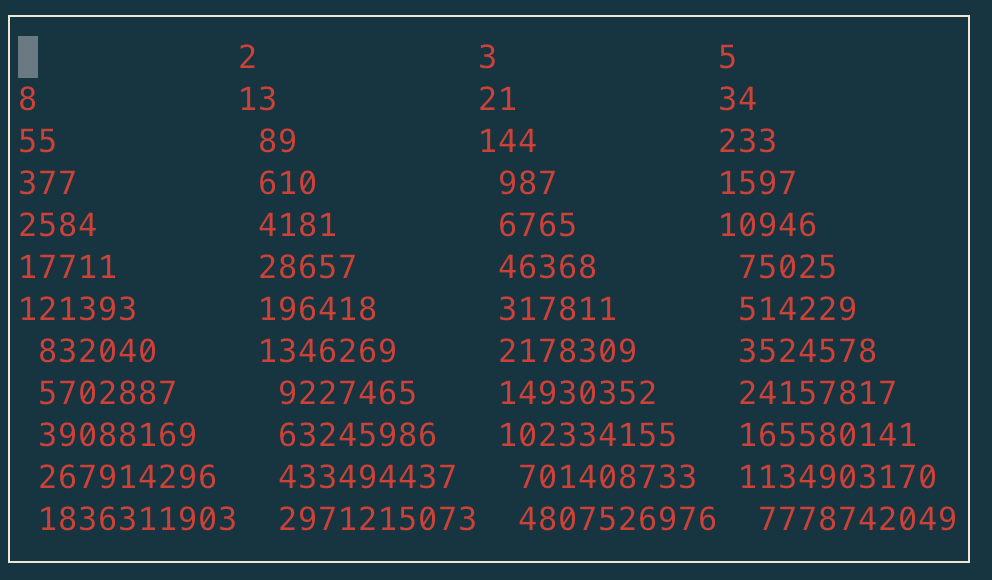
Fibonacci numbers. Formatted printing in PL/I.
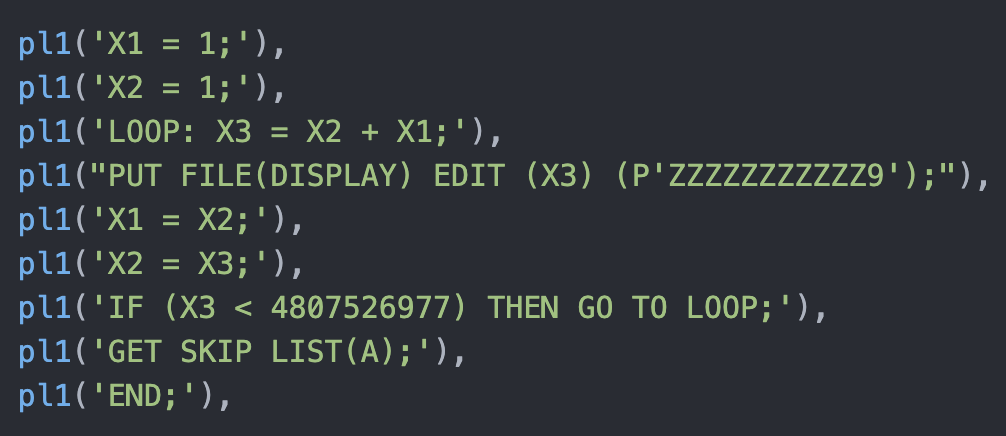
My first ever PL/I program.
This marks a significant milestone as this was one of the goals for the Q1 emulator project.
2025 02 09
Mattis extracted the character bitmaps for Q1 LMC. I hop this can help improve my understanding of the keyboard layout and shift keys. Two ROMs were decoded.
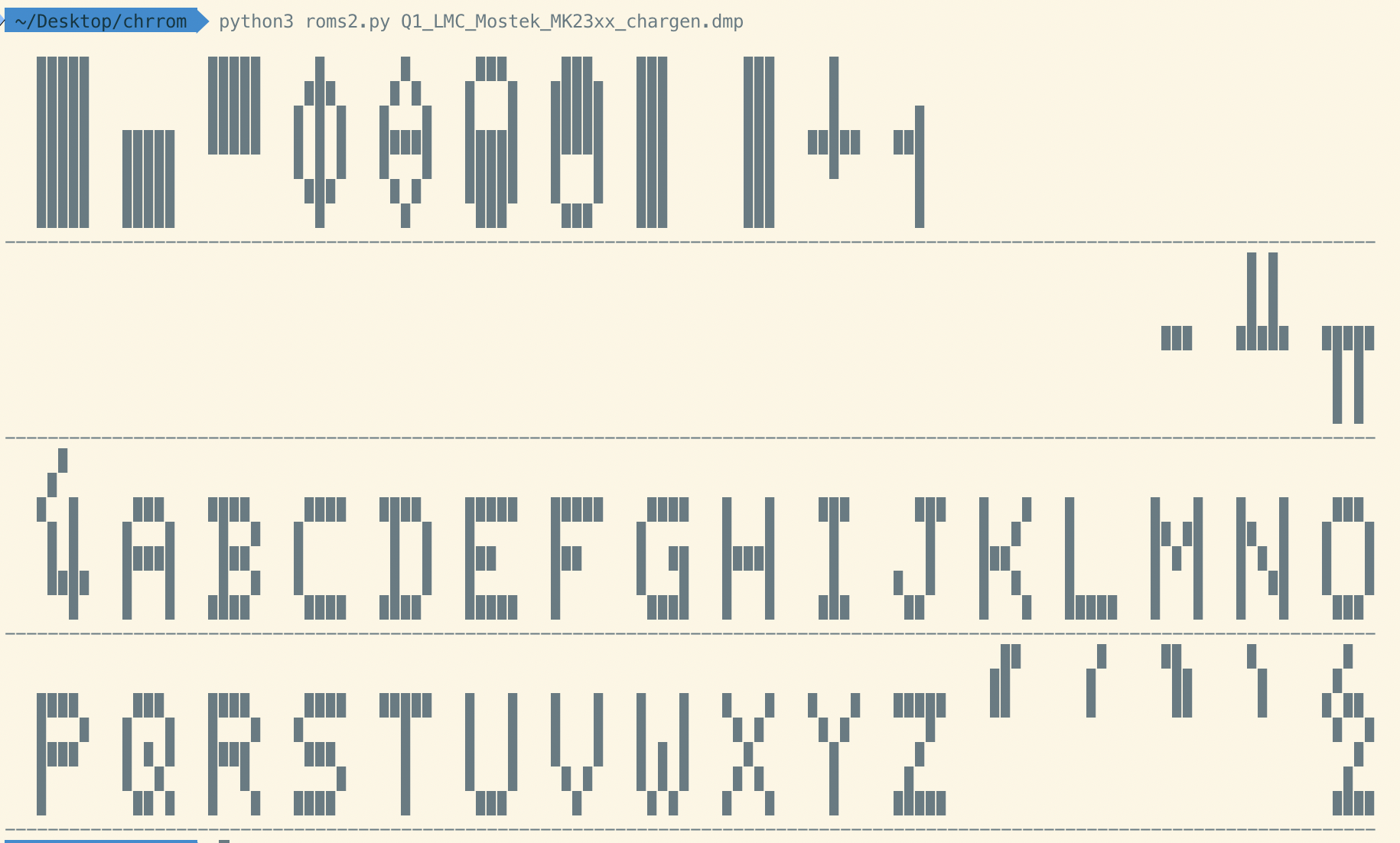
MT32xx Chargen ROM I
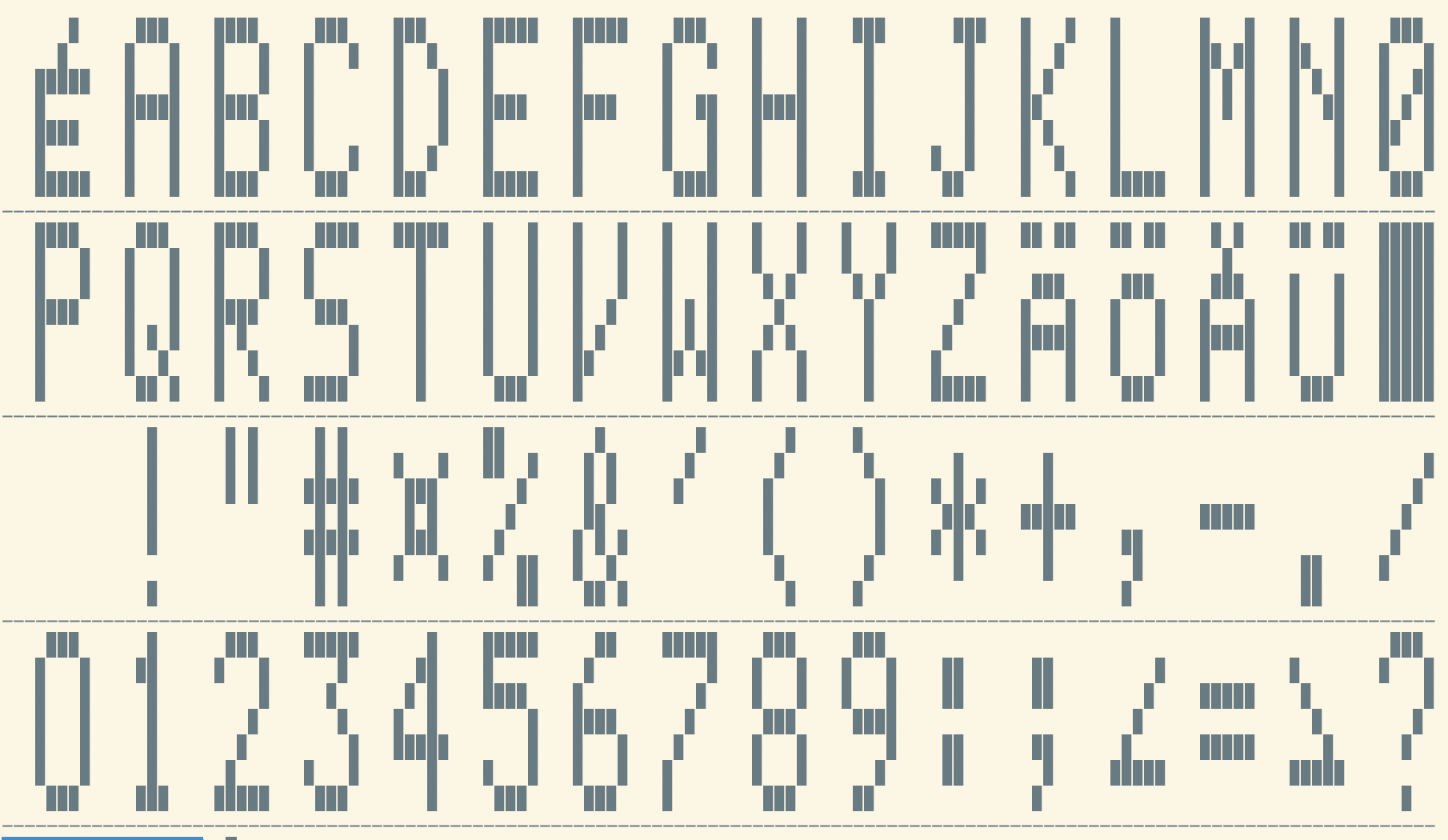
MT32xx Chargen ROM II
2025 02 27
Update of character ROM I
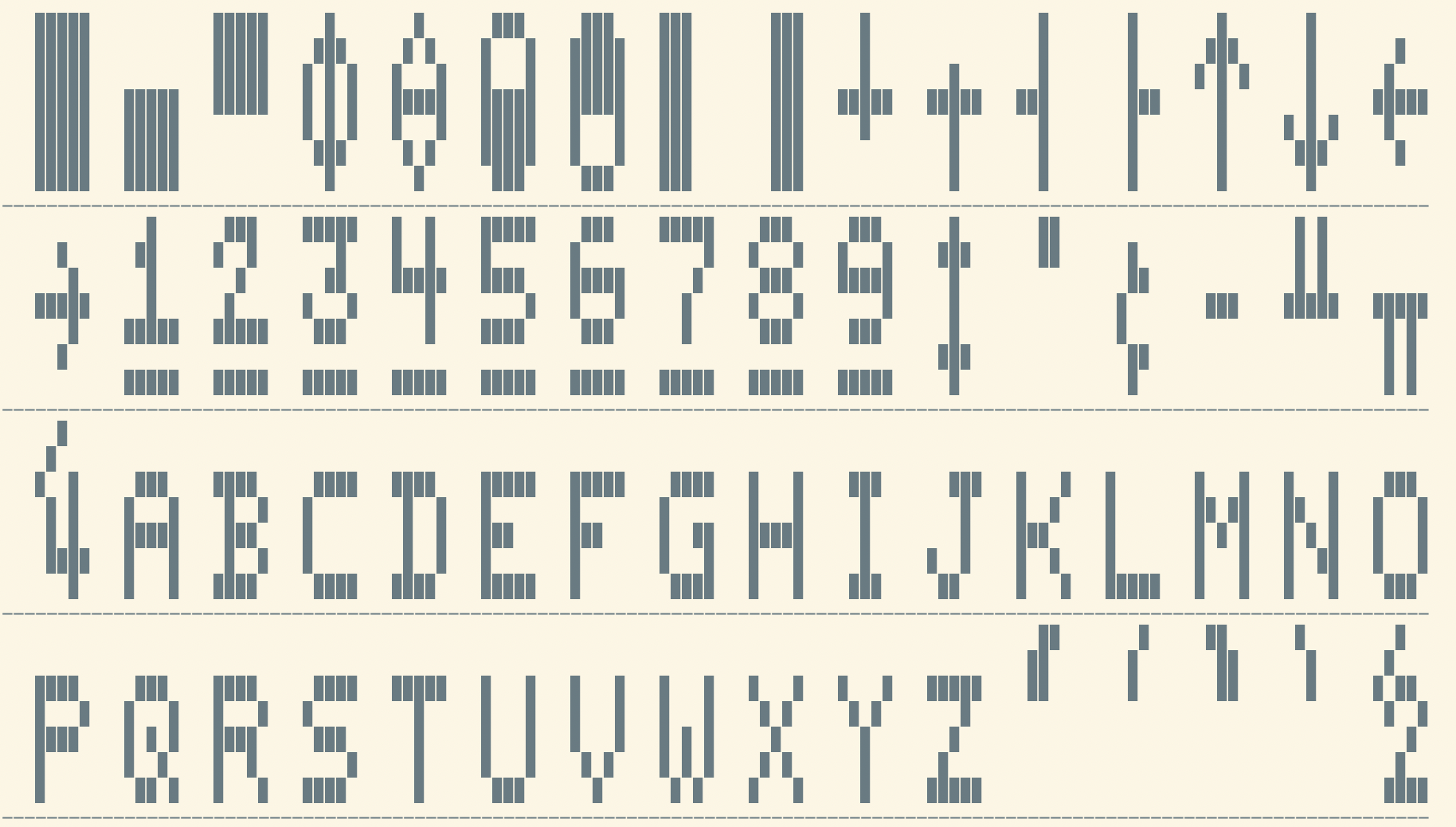
MT32xx Chargen ROM I - complete
2025 05 09
As preparation for the Q1 talk at Datahistorisk Forening, did a few improvements. emulator step size is now configurable but defaults to 103 instructions. It should be set to 1 for demonstrating live trace and backtrace.